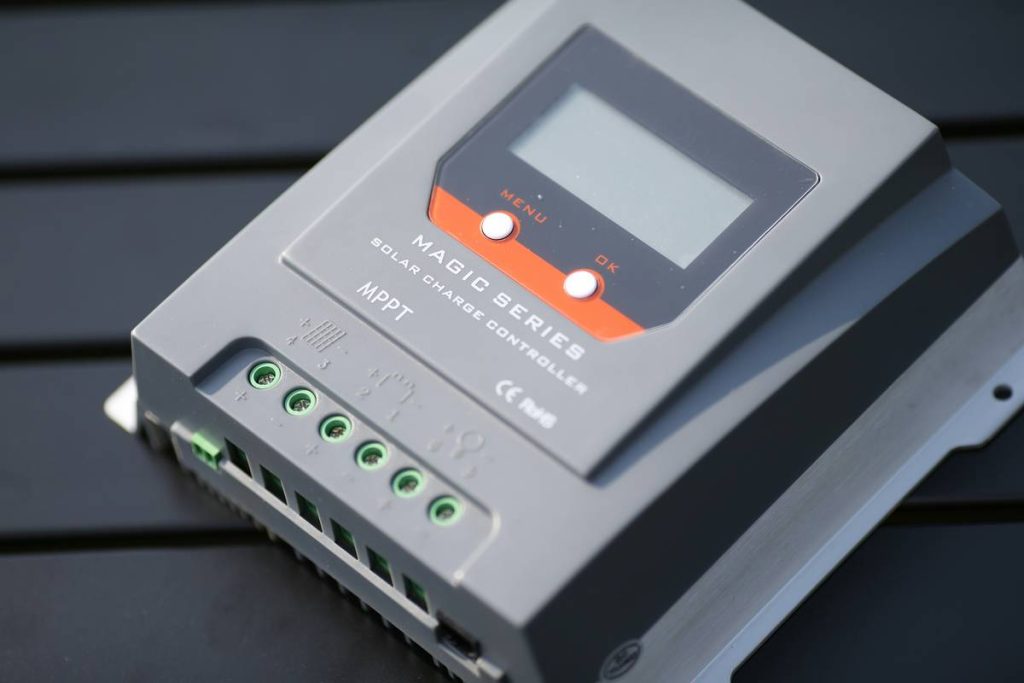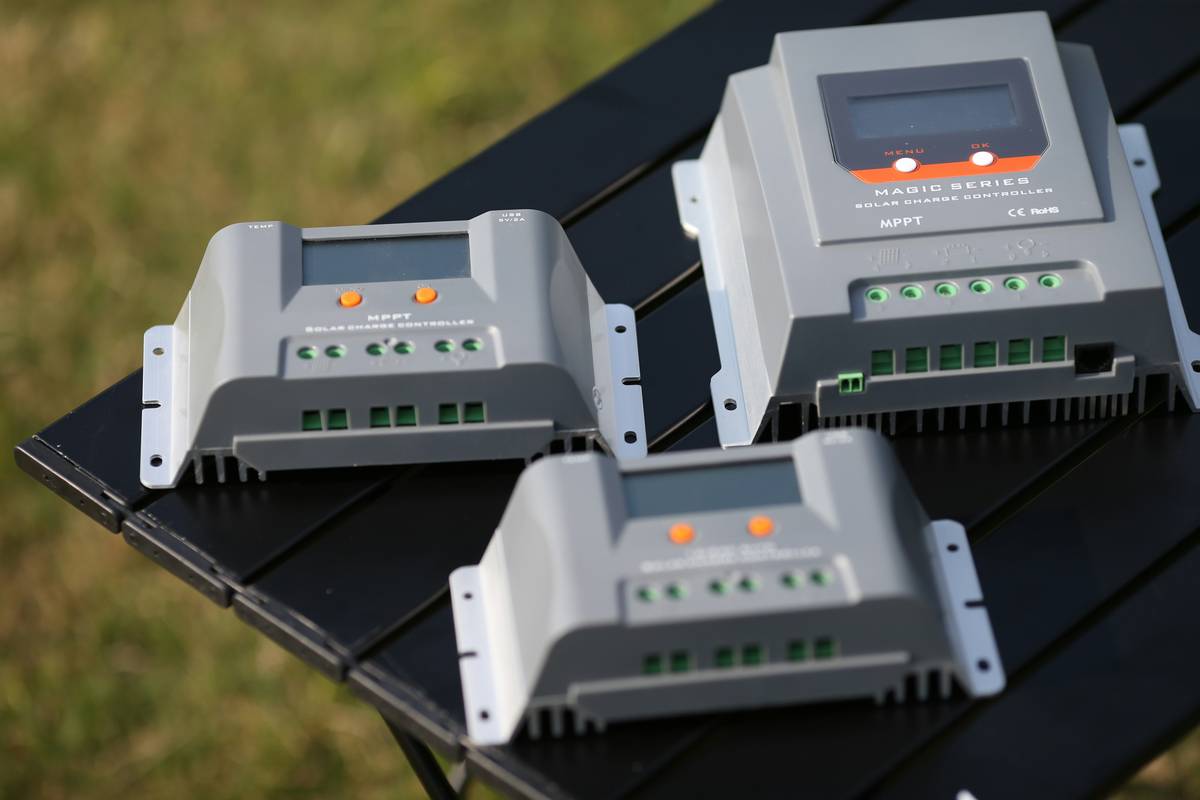
If you’ve ever fried a battery bank trying to run a DIY off-grid cabin—or worse, watched your hard-earned solar investment sit idle—you know how critical the right charge controller is. The mppt solar charge controller 12v isn’t just another box on your wall; it’s the brain that decides whether your system thrives or dies. In this guide, we’ll cut through the marketing fluff and deliver actionable, field-tested advice for homeowners serious about reliable, efficient solar power.
Table of Contents
- Why MPPT Matters in Home Solar Systems
- How to Choose and Install Your 12V MPPT Controller
- 5 Best Practices for Peak Performance
- Real-World Efficiency Gains: A Case Study
- Frequently Asked Questions
Key Takeaways
- An mppt solar charge controller 12v can harvest up to 30% more energy than older PWM models—especially in cold or cloudy conditions.
- Matching voltage compatibility (panel, battery, load) is non-negotiable; mismatched setups cause permanent damage.
- Proper grounding and fused wiring aren’t optional—they’re safety essentials often overlooked by beginners.
- Monitoring via Bluetooth or apps prevents silent failures that degrade battery health over time.
Why MPPT Matters in Home Solar Systems
In home improvement projects involving renewable energy, efficiency directly translates to return on investment. A basic PWM (Pulse Width Modulation) controller simply connects your solar panel to your battery, wasting excess voltage as heat. An mppt solar charge controller 12v, however, acts like a smart gearbox—it converts surplus panel voltage into usable current, maximizing every watt even when sunlight is weak.
I learned this the hard way. Years ago, I slapped a $40 PWM controller on a 200W rooftop array feeding two deep-cycle batteries. After three months, my battery bank was sulfated beyond recovery. Why? My panels’ optimal voltage (18V) far exceeded what the PWM could handle. Switching to an MPPT unit recovered nearly all that lost potential—and saved me from replacing $300 in batteries.
According to the U.S. Department of Energy, MPPT controllers can increase energy harvest by 10–30% compared to PWM systems, depending on environmental conditions (energy.gov). For homeowners stretching every dollar, that’s not marginal—it’s transformative.
How to Choose and Install Your 12V MPPT Controller
Step 1: Calculate Your System’s Amperage Needs
Add up the short-circuit current (Isc) of all your panels. Multiply by 1.25 for NEC safety margins. Example: Two 100W panels (Isc ≈ 5.8A each) → (5.8 × 2) × 1.25 = 14.5A. Choose a controller rated for at least 15A.
Step 2: Verify Voltage Compatibility
Your MPPT must support both your panel’s max input voltage and your 12V battery bank. Most quality units handle 12/24V auto-detection, but always check specs.
Step 3: Wire with Safety First
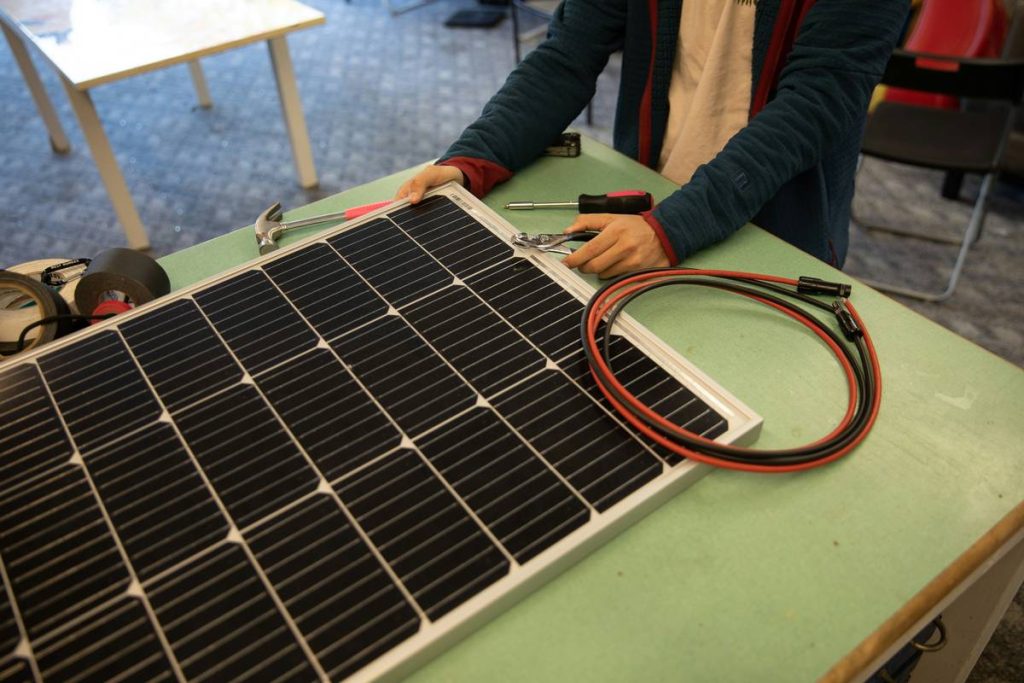
Use proper gauge copper wire (typically 10–12 AWG for small systems). Install fuses between the battery and controller—and never reverse polarity. One reversed connection ruined my first controller permanently.
Step 4: Configure Settings Accurately
Set battery type (AGM, lithium, flooded), absorption voltage, and temperature compensation. Many failures stem from using default “generic lead-acid” settings on lithium banks.
5 Best Practices for Peak Performance
- Mount in a cool, ventilated spot. Heat degrades electronics fast—avoid attics or direct sun.
- Enable daily monitoring. Apps like VictronConnect or RenogyOne alert you to voltage drops or disconnections before damage occurs.
- Never daisy-chain loads directly to the battery. Route all DC loads through the controller’s load terminal (if available) or a separate fused distribution panel.
- Seasonally adjust settings. Battery needs change in winter vs. summer; update temperature compensation accordingly.
- Avoid this terrible tip: “Just use the cheapest MPPT on Amazon.” Ultra-low-cost units often lack proper over-voltage protection or accurate MPPT algorithms. Stick with brands like Victron, EPever, or Morningstar.
Real-World Efficiency Gains: A Case Study
A homeowner in northern Wisconsin upgraded from a 20A PWM to a 30A mppt solar charge controller 12v on his 320W cabin system. Over six winter months, his average daily yield rose from 0.8 kWh to 1.1 kWh—a 37.5% gain, per his Bluetooth logger data. That extra 0.3 kWh/day powered his LED lights, router, and fridge reliably through December storms. “Before MPPT, I ran a generator twice a week,” he told us. “Now it sits unused.”
This aligns with National Renewable Energy Laboratory (NREL) findings that MPPT advantage peaks in low-light or cold climates—exactly where many off-grid homes operate (nrel.gov).
Frequently Asked Questions
Can I use an mppt solar charge controller 12v with lithium batteries?
Yes—most modern MPPT controllers support lithium (LiFePO4) profiles. Just ensure you select the correct battery type in settings and verify the controller includes low-temp charge cutoff if used in freezing climates.
What’s the difference between MPPT and PWM for a 12V system?
PWM matches panel voltage directly to battery voltage, wasting excess. MPPT decouples them, converting high panel voltage into extra current—critical when panel Vmp exceeds 17V.
Do I need a 20A or 30A mppt solar charge controller 12v?
Calculate total panel current × 1.25. If your array produces 18A max, choose 20A minimum—but 30A gives room to expand.
Where should I ground my MPPT controller?
Ground the negative bus bar or chassis lug to your system’s common grounding point, per NEC Article 690. Always consult local codes or an electrician via our Contact Us page.
Conclusion
The mppt solar charge controller 12v is your silent guardian against wasted watts and dead batteries. Treat it as the precision instrument it is—not an afterthought. When installed correctly, it quietly boosts your system’s output while protecting your investment for years. Ready to optimize your setup? Reach out to our team at MV Notifications for personalized guidance. And remember: sunlight is free, but dumb mistakes cost real money.
Efficiency isn’t flashy.
But silence from your inverter?
That’s pure payoff.